Qi Gong, (chi kung or chi gung) means Life Energy Cultivation. Is a holistic system of coordinated body posture and movement, breathing, and meditation used for health, spirituality, and martial arts training. With roots in Chinese medicine philosophy and martial arts, Qi Gong is traditionally viewed as a practice to cultivate and balance Qi (chi), translated as “life energy”.
According to Daoist, Buddhism and Confucian philosophy, Qi Gong allows access to higher realms of awareness, awakens one’s “true nature”, and helps develop human potential.
Wudang Qi Gong has two systems of practice: hard Qi Gong, which can also be called Tong Zi Gong trains the tendons, bones and skin.
As for the the internal or soft the main focus is on the body and health preservation. In particular focus is placed on deep breathing without allowing the thoughts to wander too far. The practice does not require the use of large amounts of physical energy. This type of training can help to open the lungs and strengthen respiration, strengthen the organs, and also open the energy channels and meridians of the body.
Qi Gong practice typically involves moving meditation, coordinating slow flowing movement, deep rhythmic breathing, and calm meditative state of mind. Qi Gong is now practised throughout China and worldwide for exercise and relaxation,self-healing and self-cultivation as well as for training in martial arts.
There are many definitions of Qi Gong but they all agree that: any practice involving the mind, body and breathing which can reinforce and balance life energy could be defined as Qi Gong. Such as, for instance, relaxation, yoga, meditation, Reiki, chanting or breathing techniques. To the Chinese these are all forms of Qi Gong. This can be said because the regular practice of any of the above has similar results.
The practice of Qi Gong is especially valuable for older people – it helps prolong quality life, maintains mobility, memory and clarity of thought. It can prevent all kinds of diseases, it is calming and brings contentment.
The authenticity of Qi Gong is now backed by the considerable amount of research done in China. It is also officially recognised as a genuine healing therapy by the government of China. Chinese medicine practitioners today still practice using not just herbs and needles, but will also prescribe healing Qi Gong exercises, sounds and movements, and breathing techniques, which their patients can use to better their health. Qi Gong has been known to cure, not just alleviate, a large range of diseases. These include some forms of arthritis, liver and heart disease, deafness, poor eyesight, hormonal imbalances, drug addiction, asthma and so on.
Yin and Yang
Everything in nature has a 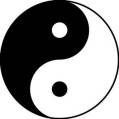 yin and yang aspect. These are two opposite yet complementary forces, for instance male (yang )and female (yin), conscious and unconscious. Taoists believe the key to a happy existence is to have the yin and yang forces in balance. By practising Qi Gong we learn to regulate our yin-yang balance.
Five elements
The 5 elements are the basis of Traditional Chinese Medicine,
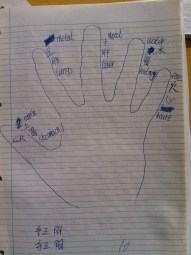
these elements (metal, wood, water, fire, earth) correspond to vital organs in the body, and need to be kept in balance to stay healthy.
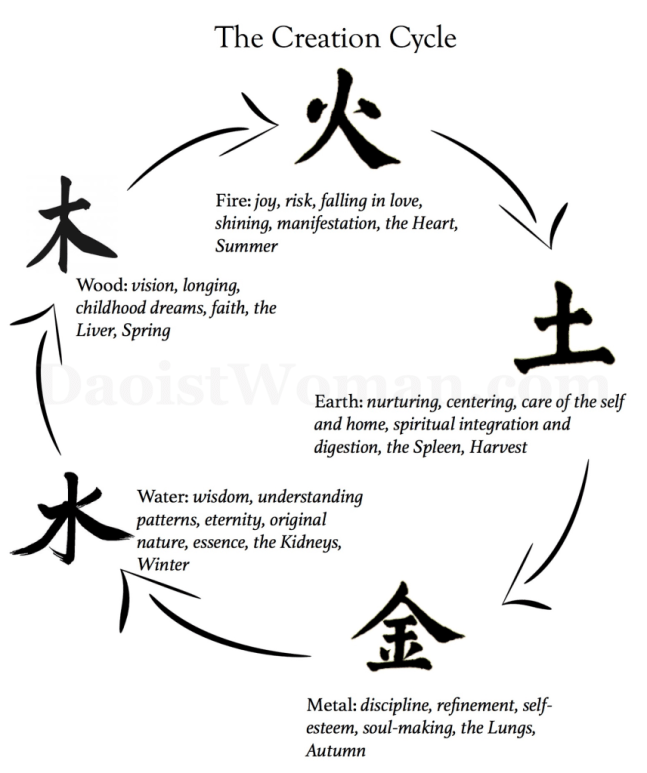
The elements can be combined in ways that complement each other, or aggravate each other; for instance problems with the fire organ (heart) can be helped out by working on the water organ (kidney ), but would be aggravated by excessive work on the wood organ (liver). These five elements are seen in the Five Element Qi Gong.
 HOLISTIC SEEKER